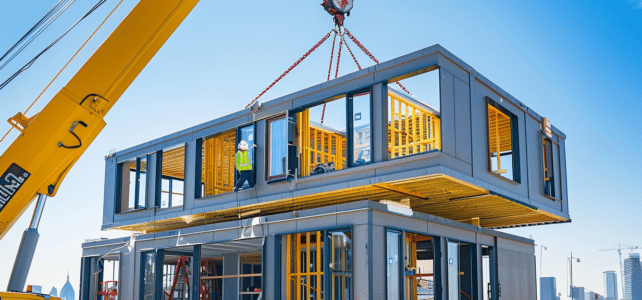
The modular construction sector is booming, marked by technological advancements and ecological transformations. Faced with major challenges such as reducing carbon footprints and the need for rapid construction, industry players are adopting new methods and materials. From prefabricated buildings to the use of recycled components, innovation is at the heart of this revolution. Customization and flexibility are becoming major aspects, responding to a growing demand for modular and adaptable spaces. Current trends thus reflect a commitment to sustainability and an adaptation to the changing needs of society.
Technological Innovations and Impact on Modular Construction
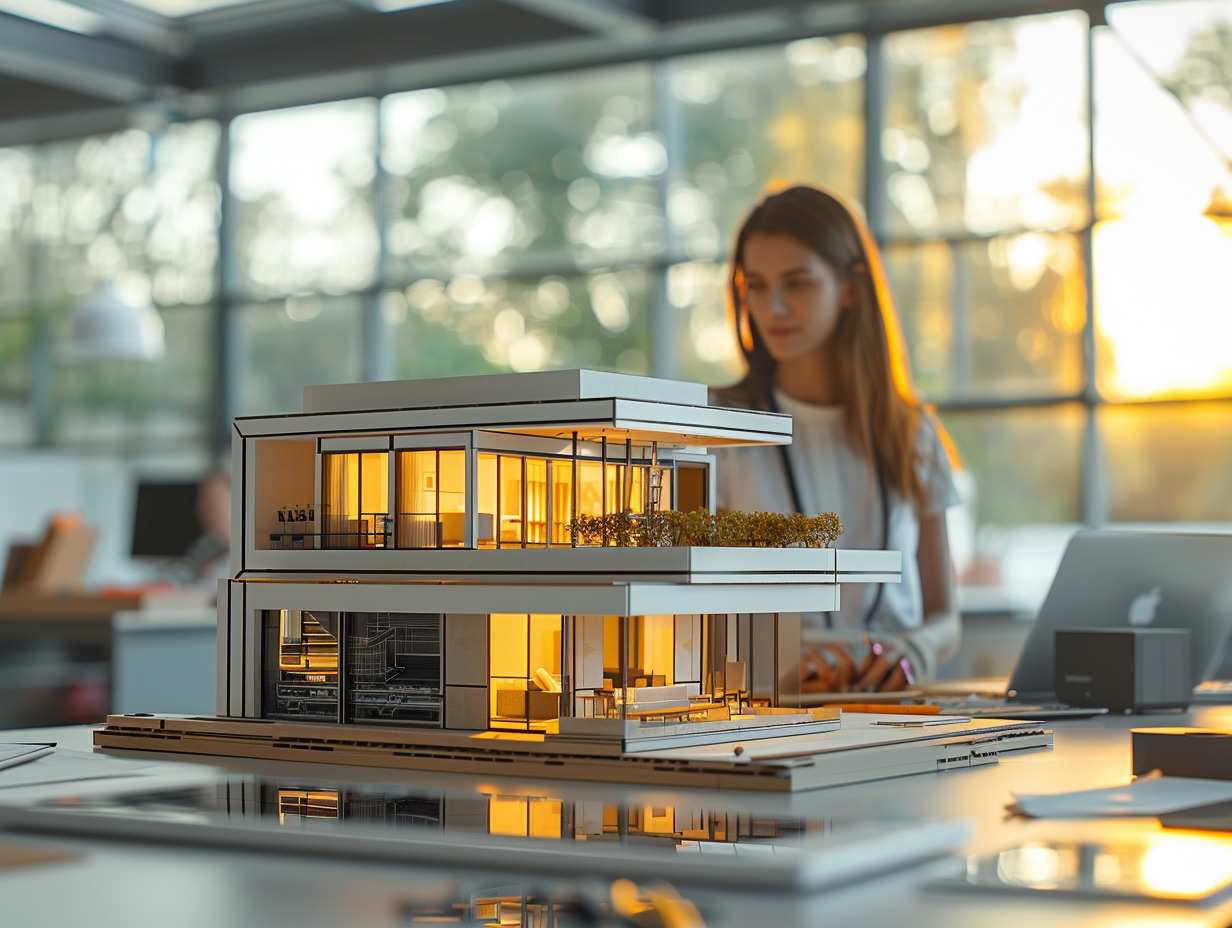
Construction technology is experiencing decisive advancements, with BIM (Building Information Modeling) leading the way. This methodology is revolutionizing modular construction by enabling the creation of detailed and interactive digital models of buildings before they are constructed. Planning, design, construction, and operation of modular buildings benefit from increased precision and efficiency, reducing timelines and production costs.
The 3D printing market is also integrating into the construction sector, particularly in the production of prefabricated modules. This technology offers unprecedented flexibility in creating complex shapes and using innovative materials, such as wood modular construction. 3D printing allows for addressing specific constraints of certain projects while promoting the reduction of construction waste.
Artificial intelligence is also making strides, optimizing processes in the construction sector. From project management to predictive maintenance, AI enables the analysis of vast amounts of data to improve decision-making and operational efficiency. The impact on energy management and engineering is notable, contributing to more sustainable and efficient modular construction.
Off-site construction, characterized by the assembly of prefabricated modules, is experiencing considerable growth. This approach, which sits at the intersection of innovation and labor shortages, allows for the completion of complex projects in record time. The company Brikstok, a pioneer in this approach, perfectly illustrates the transformation of the construction sector through these new methods, reducing environmental impact and challenging traditional practices.
Evolution of Sustainable Practices in Modular Construction
The issue of construction materials is at the heart of environmental concerns. The use of sustainable and recycled materials is becoming a standard in modular construction, not only for their reduced environmental impact but also for the superior quality they provide to buildings. Industry players, aware of these challenges, are turning to solutions such as KBriqs, an innovative type of material that illustrates the fusion of sustainability and efficiency.
In the field of architectural design, minimalism guides new trends, favoring the use of natural materials and simplicity of forms. This approach goes beyond aesthetics and is part of an eco-responsible approach, where each element is chosen for its minimal environmental impact. Modular construction projects draw inspiration from this trend to create spaces that embody both modernity and respect for the environment.
Eco-friendly construction goes hand in hand with the integration of renewable energy and the aim of passive design. Organizations such as the US Green Building Council promote these practices through certifications like LEED, thereby encouraging informed resource management and the emergence of low-energy buildings. These principles are becoming pillars in modular construction, where energy performance is measured against increasingly rigorous ecological standards.