When contacting a monastery for the first time, the response is almost never “come whenever you want.” Most communities first request a handwritten letter, sometimes addressed to the abbot or abbess, explaining the motivations and life journey. This initial filter, often underestimated, conditions the rest of the process for anyone considering a lasting entry into monastic life in France.
Settling civil obligations before knocking on the door of an abbey
One imagines monastic withdrawal as a clear break from the world. In practice, communities require that the candidate has settled their civil commitments even before the postulancy begins.
An ongoing lease, an unpaid loan, child support owed to an ex-spouse, or minor children to care for: each of these elements can block admission. The specific rules of each community must clarify housing, social coverage, possible resources, the role of work, and departure conditions. The postulancy does not create a definitive religious bond, but it assumes complete legal freedom.
For individuals who have been married, a canonical annulment of the marriage or a dispensation granted by Rome is required. This point regularly blocks candidates between the ages of 25 and 45, sometimes recently converted. Those wishing to withdraw permanently to a monastery must therefore anticipate administrative procedures that can sometimes take more than a year.
The requested documents vary by institute, but generally include baptism and confirmation certificates, a medical certificate, proof related to any previous commitments (marriage, vows in another institute), and a valid identification document.
Monastic training journey: from pre-postulancy to solemn profession
Entering a community does not resemble moving in. It is a gradual process, marked by formal steps, where the community and the candidate mutually evaluate each other over several years.
Pre-postulancy and postulancy
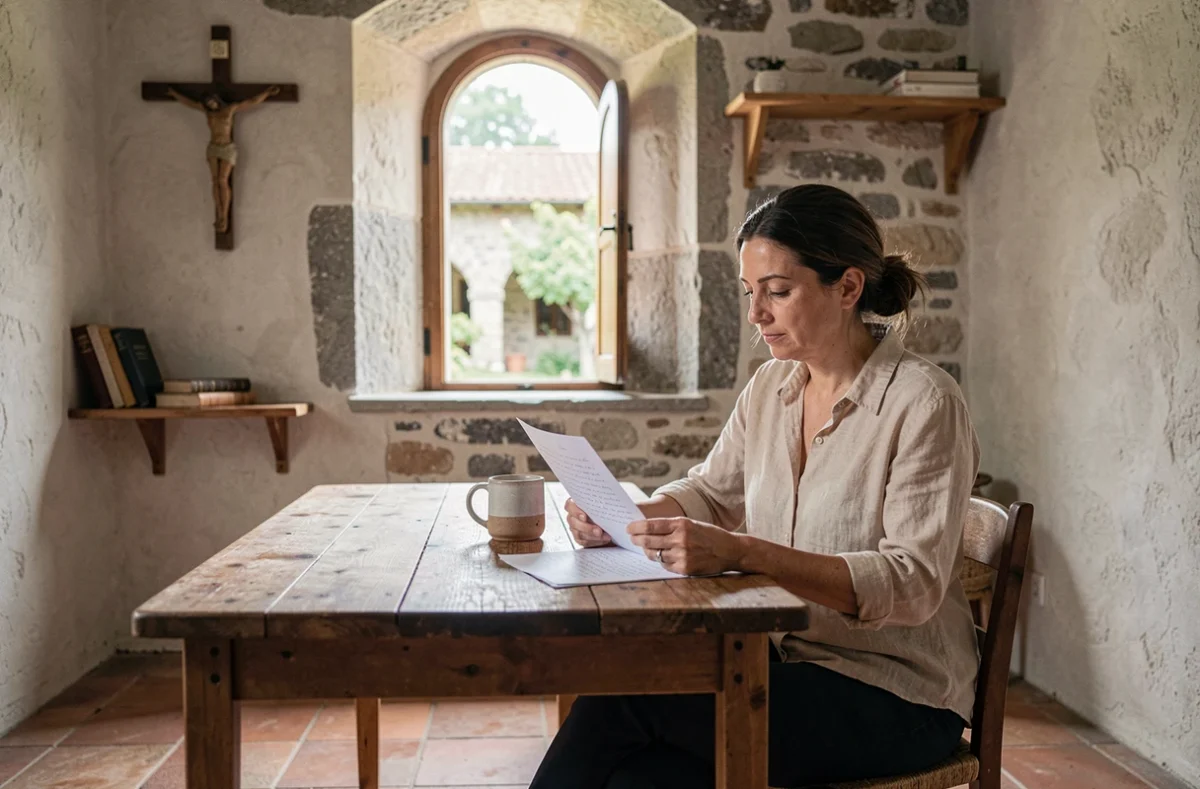
The pre-postulancy consists of repeated stays at the monastery, usually a few weeks spread over several months. Meals are shared, offices are attended, and work is done with the monks or nuns. It is not yet a commitment, but a time for mutual observation.
The postulancy that follows usually lasts several months. The candidate lives at the rhythm of the community without wearing the religious habit. The community assesses maturity, health, and the ability to live collectively. Regular interviews with the novice master or mistress allow for measuring adaptation.
Canonical novitiate and first vows
The canonical novitiate lasts a minimum of one year. It is the most intense training period: study of the rule (Benedictine, Cistercian, or other depending on the community), deepening of liturgical prayer, initiation to the manual work specific to the place.
At the abbey of Solesmes, the first vows come only after at least three years following entry. The solemn profession occurs after at least six years. These durations vary from one institute to another, but the principle remains the same: one does not commit lightly, nor does the community.
What each step concretely involves
- Pre-postulancy: occasional stays, no change of residence, possible continuation of professional activity between visits.
- Postulancy: residence at the monastery, gradual abandonment of external activity, participation in domestic tasks and community work.
- Novitiate: wearing the habit, theological and practical training, continuous evaluation by the community council.
- Temporary then solemn vows: gradual commitment (poverty, chastity, obedience, stability for Benedictines), which only becomes definitive after a vote by the community.
Choosing between abbey, priory, and new community in France
Not all monasteries operate the same way. The choice of community type has a direct impact on daily life and the duration of the discernment process.
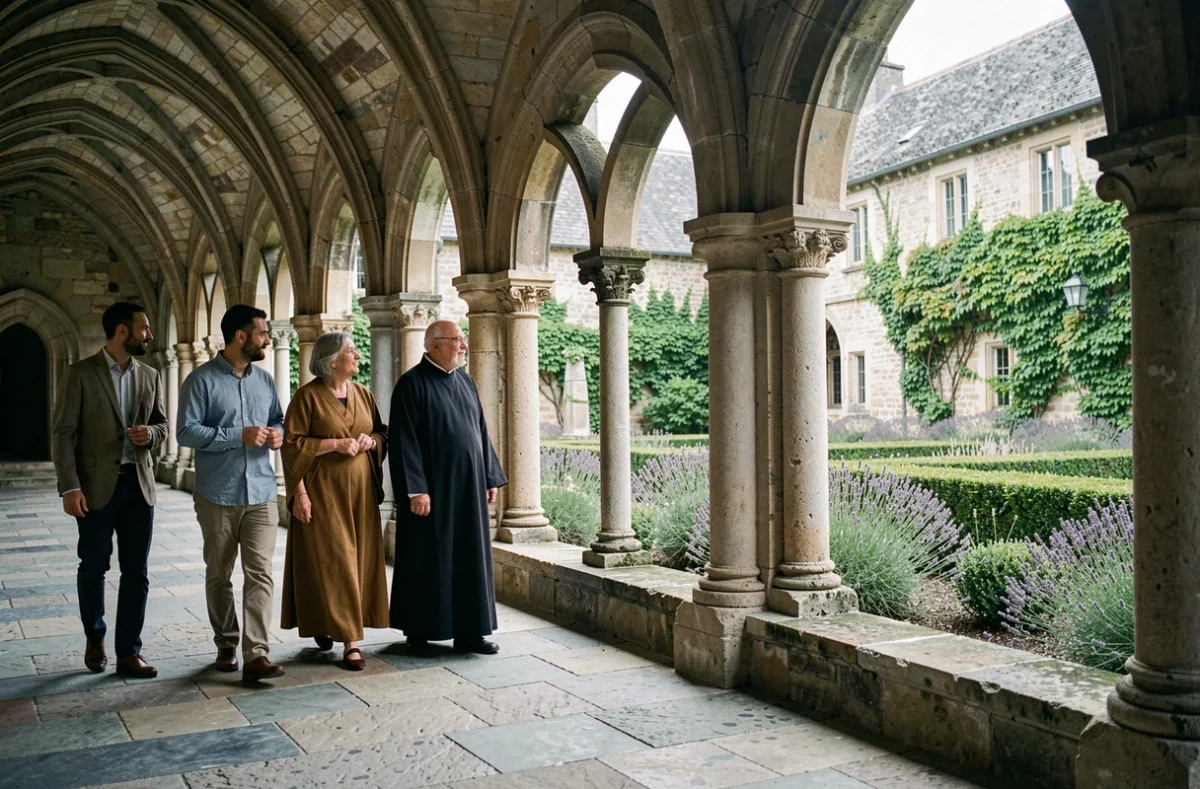
A Benedictine or Cistercian abbey follows an ancient rule, with a very structured framework: fixed-hour offices (from Matins to Compline), prolonged silence, strict enclosure for some female communities. The daily rhythm is entirely organized around prayer and work.
A priory, often smaller, sometimes depends on a mother abbey. Life there is similar, but the reduced number of members implies more versatility in tasks. One might find oneself in the garden, in the kitchen, and welcoming guests all in the same week.
New communities (founded in recent decades) sometimes offer different lifestyles: mixed living between brothers and sisters in separate buildings, external apostolate, welcoming families. Feedback varies on this point, with some candidates appreciating the flexibility, while others seek a more traditional framework.
Daily life and practical constraints in a French monastery
You do not choose your room, you do not have a personal bank account (after vows), and outings are subject to the superior’s permission. Accommodation is simple, sometimes a cell of a few square meters with a bed, a desk, and a washbasin.
Participation in domestic tasks is systematic. Making your bed, helping with the dishes, working in the workshop or the vegetable garden: monastic life relies on partial self-sufficiency. Some communities produce goods (cheese, beer, jams, ceramics) that contribute to the local economy.
- Typical schedule: rising before dawn for the first office, going to bed after Compline (around 8:30 or 9:00 PM depending on the seasons).
- Meals taken in common, often in silence, with reading aloud.
- Limited personal time, dedicated to spiritual reading or correspondence.
Permanent entry into a monastery in France is nothing like a spur-of-the-moment decision validated in a few weeks. Between civil procedures, community discernment, and years of training, the journey filters as much as it forms. Those who see it through do so because the community has chosen them as much as they have chosen the community.