
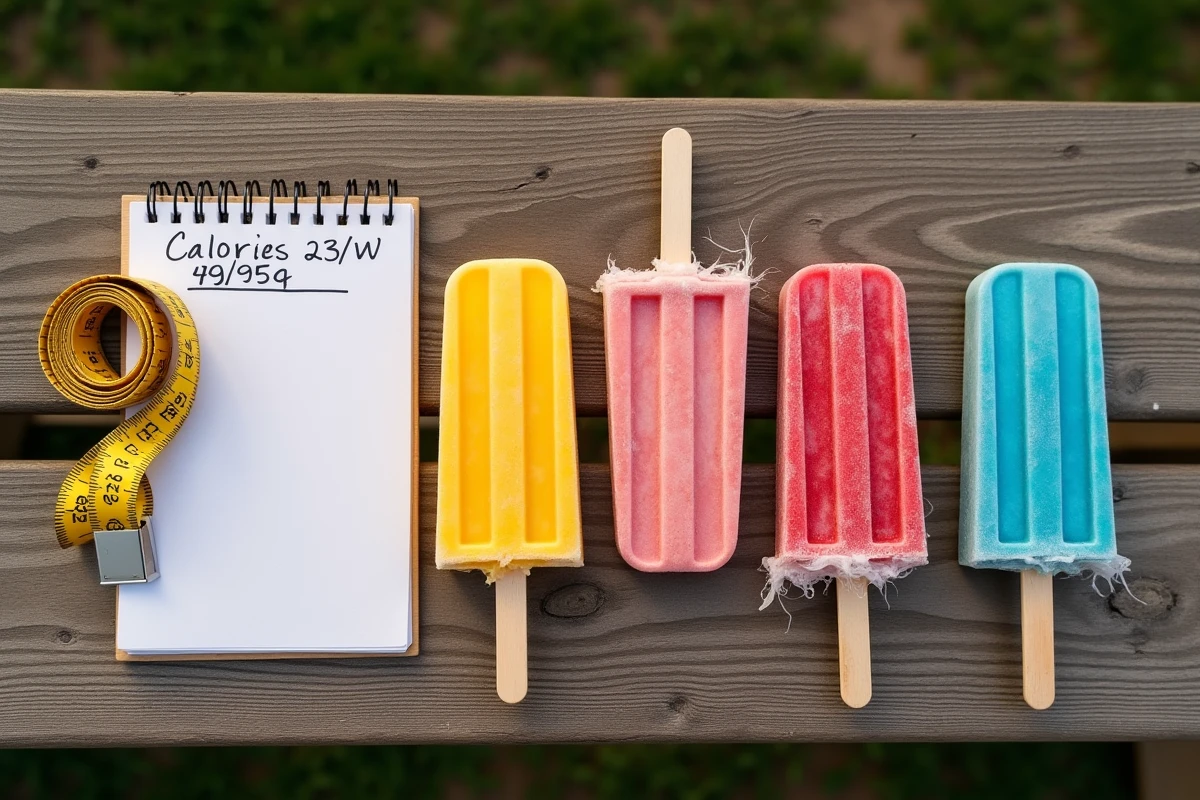
A Mister Freeze displayed at a few dozen calories per popsicle gives the impression of a harmless dessert. The question of calories in Mister Freeze comes up every summer, fueled by comparisons that place this water ice far ahead of a cream cone or a chocolate Eskimo. But the raw caloric value tells only part of the story, especially when looking at the actual composition of the product and its effect on blood sugar levels.
Sugar, glycemic index, and ketosis: what calories alone do not measure
Most comparisons stop at the number of kilocalories. A classic Mister Freeze shows a low number per unit, which classifies it among the lightest desserts in pure energy. This positioning masks a central point: almost all of these calories come from simple sugars, primarily glucose-fructose syrup.
For someone following a low-carb or ketogenic diet, the relevant data is not the calorie count but the carbohydrate load and the glycemic index. The fast sugars contained in a water ice cause a disproportionate spike in blood sugar relative to the volume consumed. This spike is enough to interrupt ketosis for several hours, even if the caloric intake remains modest.
An article detailing the calories in Mister Freeze clearly shows that the nutritional profile goes beyond simple energy counting. Consuming two popsicles in the afternoon represents a load of simple sugars comparable to that of a can of soda, with almost no feeling of satiety.
Mister Freeze compared to other frozen desserts: comparison table
To situate the Mister Freeze in the landscape of summer desserts, a comparison by product type allows for visualizing the differences.
| Type of frozen dessert | Calories (per standard serving) | Simple sugars | Fats | Proteins |
|---|---|---|---|---|
| Mister Freeze (1 popsicle) | Very low | High (almost all calories) | Almost none | None |
| Artisanal fruit sorbet (1 scoop) | Moderate | Moderate to high | Almost none | None |
| Vanilla ice cream (1 scoop) | High | Moderate | High | Low |
| Chocolate-covered Eskimo | High | High | High | Low |
| Plain frozen yogurt (1 serving) | Moderate | Low to moderate | Low | Moderate |
The Mister Freeze stands out due to its total lack of fats and proteins. It is a concentrate of water and sugar, without any other macronutrient. In contrast, ice cream, despite a higher total caloric count, provides fats and some proteins that slow down sugar absorption and offer more satiety.
Why the low total calorie count is misleading
A dessert made exclusively of fast sugars and water does not trigger any lasting satiety signals. The direct consequence: people consume several in a row. Two or three popsicles in the afternoon negate the initial caloric advantage and generate a blood sugar spike followed by a drop that reignites the craving for sugar.
The absence of proteins and fats accelerates gastric emptying. The product passes through quickly, leaving a residual hunger that the absorbed calories do not compensate for. This is the opposite mechanism of that of frozen yogurt, which slows digestion thanks to its proteins.
European labeling and nutritional transparency since 2026
The EU regulation 2025/1234, which came into effect in January 2026, imposes a “high added sugar” labeling requirement on ultra-processed products, including water ices like Mister Freeze. This measure, published in the Official Journal of the European Union, aims to compensate for the perception bias created by a low caloric display.
Before this regulation, a consumer could read the label of a Mister Freeze and conclude it was a light choice without noticing the proportion of added sugars in the composition. The new labeling requires this information to be displayed visibly on the front of the packaging.
This regulatory evolution confirms a finding that nutritionists have been stating for years: calories alone are not enough to qualify the quality of a food. A product with low caloric density can be nutritionally poor and metabolically disruptive if its carbohydrate profile is unbalanced.

Ketogenic and low-carb diets: the Mister Freeze trap in summer
Ketogenic diets are based on a strict principle: keep carbohydrate intake below a very low daily threshold to force the body to use fats as an energy source. In this context, a single Mister Freeze can represent a significant portion of the allowed carbohydrate quota for an entire day.
The problem is not limited to the quantity of carbohydrates. The nature of the sugars used (glucose-fructose syrup) triggers a rapid insulin response that interrupts ketosis. Regaining this metabolic state after an interruption generally takes one to two days, depending on the individual.
- Glucose-fructose syrup generates a glycemic spike faster than regular sucrose, which amplifies the insulin response
- The absence of fibers, proteins, and fats in the product eliminates any buffering effect on sugar absorption
- Summer consumption often occurs outside of meals, at a time when the body has no other nutrients to digest simultaneously
For someone on a low-carb diet without aiming for strict ketosis, the Mister Freeze remains problematic. A popsicle consumed alone produces a glycemic spike comparable to a handful of candies, with the same lack of nutritional value.
Alternatives compatible with a low-carb summer
Replacing a Mister Freeze with a homemade sorbet made from whole blended and frozen fruits radically changes the nutritional profile. The fibers from the fruit slow down the absorption of natural fructose. A plain frozen yogurt, possibly flavored with vanilla or lemon, provides proteins that extend satiety.
- Whole blended fruits then frozen in molds (strawberries, raspberries, mango): fibers preserved, no added sugar
- Plain Greek yogurt frozen with some fruit chunks: proteins, low glycemic load
- Fruit-infused water frozen into popsicles: zero sugar, identical refreshing effect
The Mister Freeze is not a caloric danger in itself. Its real risk is creating an illusion of lightness that leads to consuming several, among people who think they are making a dietary choice. The European labeling of 2026 partially corrects this bias, but careful reading of the ingredient list remains the most reliable reflex to assess what we are actually eating this summer.