A cherry tree stripped in two mornings, trampled tomato seedlings, robins deserting the feeder: when magpies settle in, the damage accumulates quickly. Protecting your garden from these corvids requires more than just a simple scarecrow. Magpies are intelligent, adaptable birds, and most solutions lose their effectiveness within a few days if we do not understand their logic of operation.
Why do magpies return despite visual deterrents?
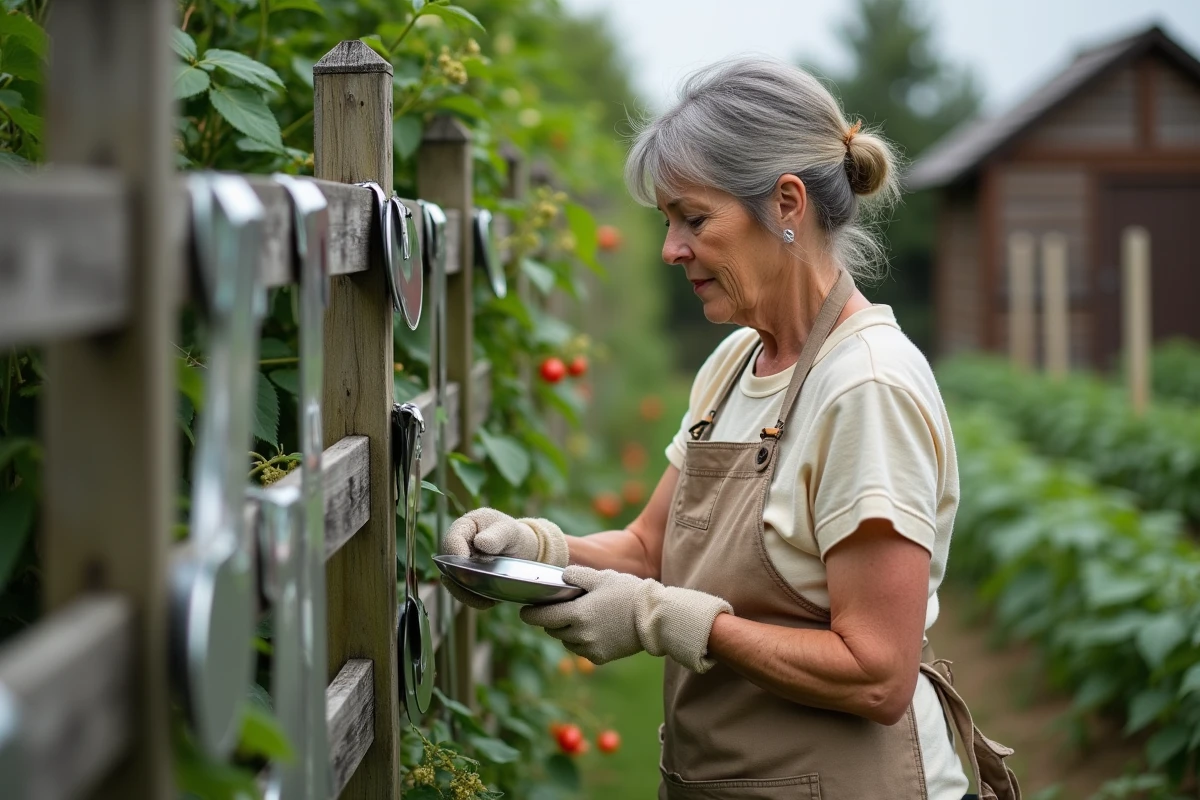
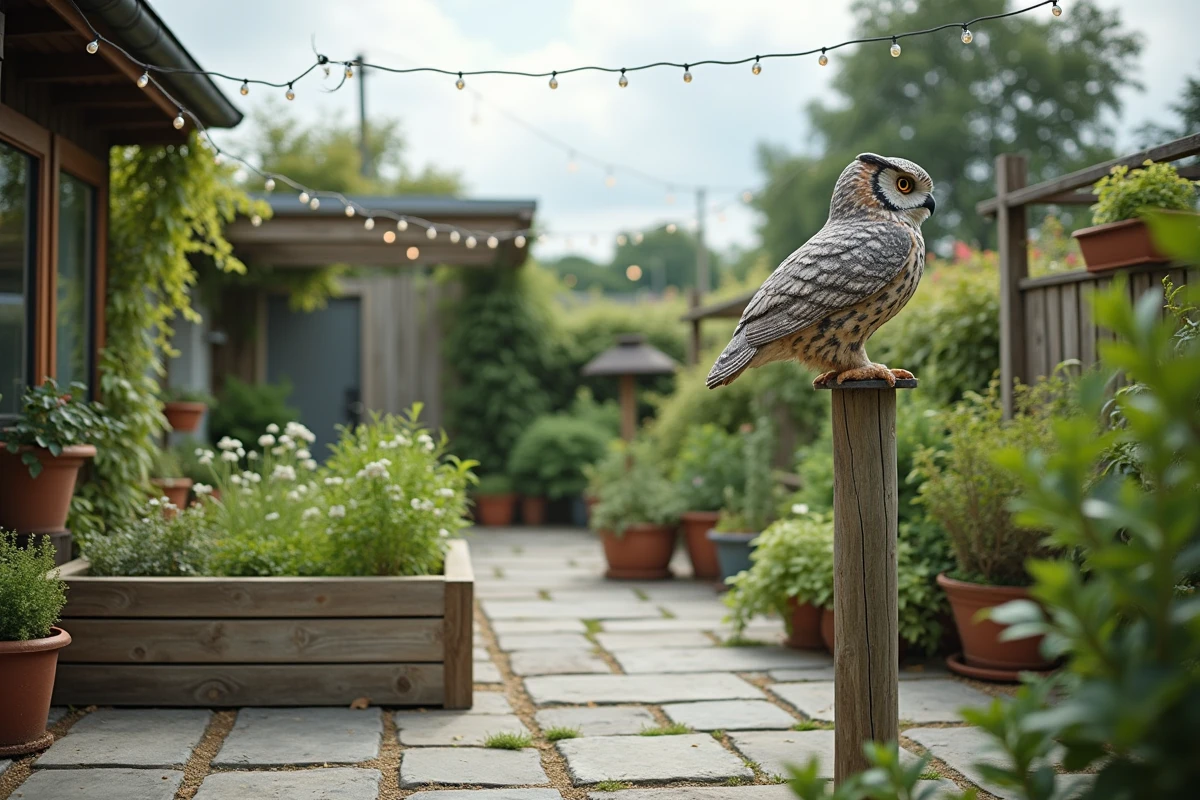
We’ve all tried hanging CDs in fruit trees or a silhouette of a raptor fixed on a stake. The reflections and threatening shapes work for the first few days, sometimes the first week. Then the magpies return as if nothing happened.
Studies on corvid behavior confirm this observation: magpies quickly get used to static deterrents, with a marked decrease in effectiveness after a few days to a few weeks if the devices remain in the same place. This habituation phenomenon explains why so many gardeners end up disappointed by these methods.
To ensure that visual repellents maintain a minimum effect, they must be moved regularly (every three to four days) and different types of devices should be alternated. A shiny object, a windmill, a reflective strip, used in rotation in different areas of the garden, pose more problems for magpies than a single system left in place all season. Knowing how to scare magpies away from the garden starts with this rule of constant variation.
Cutting off access to food: the most sustainable method against magpies
Before multiplying gadgets, it’s worth asking a simple question: what attracts magpies to our gardens? In the vast majority of cases, it’s food. Accessible food scraps, poorly closed trash cans, pet bowls left outside, fallen fruits under trees, massive bird feeding in the garden.
Limiting access to attractive resources is the most effective long-term solution. The LPO (French League for the Protection of Birds) actually recommends this approach rather than multiplying deterrents, reminding us that magpies also play a useful role in the garden: they consume larvae and small rodents.
Here are concrete actions that reduce the attractiveness of your garden to magpies:
- Pick up fallen fruits at the foot of fruit trees every day, especially ripe cherries and strawberries whose juice attracts them to quench their thirst.
- Bring in pet bowls after meals and keep trash cans closed with a heavy lid.
- Reduce the amount of food in bird feeders and prefer models equipped with grids that allow tits and robins to pass through but block corvids.
- Do not leave meal scraps on the garden table or terrace, even temporarily.
Physical protection of the vegetable garden and crops with nets
When growing tomatoes, strawberries, or small fruits, physical protection remains the most reliable barrier. A bird net stretched over crops prevents any direct access. Magpies cannot peck or land on the protected plants.
The choice of netting matters. A sufficiently dense weight and mesh of a few centimeters prevent magpies from passing through without trapping pollinating insects. The net is fixed on hoops or stakes to maintain space between the net and the plants; otherwise, magpies will peck through the mesh by landing on it.
Priority areas to cover
There is no need to cover the entire garden. Magpies target areas with easy food: the vegetable garden during fruit ripening, laden cherry trees, rows of strawberry plants. Covering these specific areas with a net during the harvest period is sufficient in most cases.
For large fruit trees, wrapping the crown with a net remains cumbersome but very effective. You can also protect only the accessible lower branches and accept sharing some fruits higher up.
Sound deterrents: real effectiveness and regulatory constraints
Devices that emit distress calls or raptor sounds have been around in agriculture for a long time. On paper, the method works better than visual deterrents because it engages another sense. In practice, feedback varies depending on the installation and environment.
Several municipal and prefectural orders now regulate the use of these devices in France. Time restrictions and noise thresholds apply, especially near inhabited areas. Before investing in a sound deterrent, check local regulations with your town hall. In a housing estate or an urban garden, the risk of neighborly conflict is real.
Ultrasonic devices: a false good idea outdoors
Ultrasonic devices are often presented as the ultimate discreet solution. Outdoors, their range disperses and their effectiveness against magpies remains very limited. Field experience from specialized manufacturers confirms this: ultrasounds do not provide reliable protection for a garden or vegetable patch exposed to corvids.
Combining methods for truly effective protection
No single solution solves the magpie problem in the long run. What works is the combination of several approaches tailored to each area of the garden.
- Eliminate sources of easy food (fruits on the ground, scraps, bowls) to reduce the overall attractiveness of your space.
- Install nets on sensitive crops in the vegetable garden and on fruit trees during the harvest period.
- Use visual deterrents in rotation (shiny objects, reflective strips) as a complement, moving them regularly.
- Protect small bird feeders with suitable grids so that tits and robins can feed without facing competition from magpies.
Consistency in maintaining these devices makes the difference. A poorly stretched net, a deterrent forgotten in the same place for weeks, an open trash can: every flaw will be exploited. Magpies are opportunistic birds that constantly test the limits of what we oppose to them.