
Your Nutribullet sits proudly on the countertop, a faithful ally for your morning smoothies. But when temperatures drop, the craving for a warm soup takes over. Preparing a hot soup with a Nutribullet is entirely possible, provided you follow a few rules regarding steam and the temperature of the ingredients.
Hot Soup with Nutribullet: What Safety Requires Before the Recipe
On most personal Nutribullet models (the classic “bullet” range), there is no pressure release valve on the lid. The European FAQ for Nutribullet, updated in 2024, specifies: never blend boiling liquid in a blender without a vented lid.
The reason is physical. A very hot liquid produces steam, steam creates pressure in the closed bowl, and the lid can pop off, ejecting hot liquid.
The solution is simple. Cook your vegetables in a pot or oven, then let them cool slightly before blending. A temperature below the boiling point is sufficient to achieve a creamy result without the risk of splattering. Some users also fill the bowl to a maximum of two-thirds to leave space for residual steam.
Among the soup recipes with Nutribullet available online, most follow this logic: separate cooking, warm blending, final reheating in a pot or microwave.
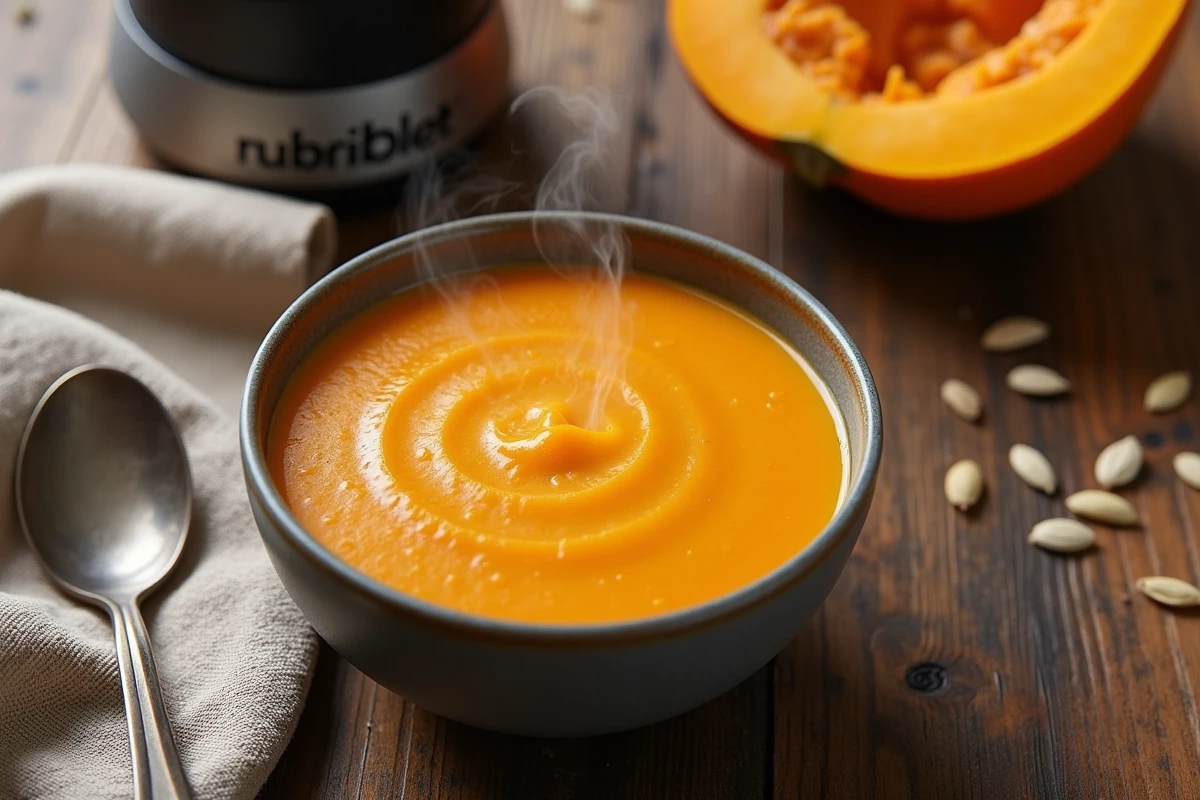
Classic Nutribullet or Heating Blender: Two Different Approaches
Since 2023-2024, Nutribullet has been marketing devices capable of directly heating preparations in certain markets (UK, USA). The Nutribullet Smart Touch Blender Combo and the Nutribullet Rx include a heating function that brings soup to a serving temperature.
In France, these models remain poorly distributed. The majority of French users have a classic Nutribullet, designed for cold or warm blending. The difference between the two approaches radically changes the preparation flow:
- Classic Nutribullet: cooking ingredients in a pot, partial cooling, blending in the bowl, then reheating before serving. Three steps, two utensils.
- Nutribullet Heating Blender: raw ingredients are placed in the bowl, the device cooks and blends in one cycle. One step, one utensil.
- Mixed Alternative: roasting vegetables (squash, sweet potato) in the oven, then blending in the classic Nutribullet with warm (not boiling) broth. Oven roasting concentrates flavors without multiplying dishes.
If you are considering purchasing a new model to regularly make soups, check for the mention of “vented lid” in the product description. This feature distinguishes devices compatible with hot preparations.
Texture and Blending Power: Getting the Best from Nutribullet for Creamy Soups
A good creamy soup relies on a perfectly smooth texture, without any grain or noticeable fiber. The blending power of the Nutribullet is an asset in this regard. Even entry-level models produce a homogeneous result with cooked and tender vegetables.
To achieve a silky texture without adding cream, potato or celery root acts as a natural binder. A small amount is sufficient: one-quarter of the total volume of vegetables. The warm broth (poured after slight cooling) replaces water and adds depth of flavor.
The Order of Adding Ingredients Matters
First, place the liquid in the bowl, then the cooked vegetables. The liquid at the bottom facilitates blade rotation from the start and avoids straining the motor. Blend in short bursts of a few seconds, then start a continuous cycle. Do not exceed the maximum fill line indicated on the bowl, especially with warm ingredients.
Fibrous vegetables like leeks or celery stalks require longer blending. Count an additional ten seconds compared to squash or carrots. If the result remains grainy, add a splash of broth to thin the preparation.

Three Soups to Try with a Classic Nutribullet
Carrot and Cumin Cream Soup
Cook sliced carrots in vegetable broth until tender. Add a teaspoon of ground cumin at the end of cooking. Let cool slightly, pour everything into the Nutribullet, and blend until smooth. Cumin releases its flavor better in warm liquid, making this soup more aromatic than a classic cream soup.
Zucchini Soup with Fresh Cheese
Sauté diced zucchini with a bit of garlic, then cover with broth and cook for about fifteen minutes. After partial cooling, blend in the Nutribullet. Add a spoonful of fresh cheese directly into the bowl before the final blending cycle. The cheese incorporates evenly and gives a creamy texture without weighing down the soup.
Sweet Potato and Coconut Milk Cream Soup
Roast pieces of sweet potato in the oven with a drizzle of olive oil. Once tender and slightly caramelized, transfer them to the Nutribullet with coconut milk and warm broth. Blend in bursts. Oven roasting concentrates the natural sugars in the sweet potato, resulting in a naturally sweet cream soup without added sugar.
Cleaning the Nutribullet After Soup Use
Soups leave more residue than smoothies, especially when they contain garlic, leeks, or spices. Rinse the bowl and blades immediately after use. If you wait, the residue dries around the blade axis and becomes difficult to remove.
An effective method: fill the bowl halfway with warm water and a drop of dish soap, then run a blending cycle for a few seconds. This technique cleans the corners of the blades without disassembly. Rinse with clear water and let air dry, bowl upside down.
The rubber seal of the bowl absorbs odors over time. Soaking in water mixed with baking soda for about twenty minutes eliminates persistent soup odors, especially those from onion or leek.
The classic Nutribullet was not designed for soup, but it works remarkably well as long as the temperature constraint is respected. Cook separately, let cool, blend, reheat: this four-step process produces creamy soups of a finesse that many heating blenders struggle to match.