
Every morning, thousands of newspaper front pages are published simultaneously in France and around the world. Accessing these front pages in real time is a concrete challenge for monitoring professionals, journalists, educators, or individuals who want to compare how the same news is treated from one publication to another. Several tools today allow users to view these front pages without purchasing each publication, but their operation and legal limitations deserve careful examination.
Neighboring Rights and Aggregation of Front Pages: What the European Directive Changes
Before looking at how to access the front pages, it is important to understand why their online dissemination is not a trivial act. The European directive 2019/790, transposed into French law, established a neighboring right for press publishers. This provision requires platforms displaying excerpts, headlines, or cover images to enter into licensing agreements with the relevant publishers.
Since 2021, financial agreements have been signed between platforms like Google and French publisher organizations (notably APIG). The French Competition Authority intervened several times between 2020 and 2022 to regulate these negotiations.
For a service that aims to gather all the front pages in real time, the question of the right to reproduce logos, layouts, and headlines arises directly. Websites that aggregate this content without agreements expose themselves to legal action.
This legal constraint explains why some platforms limit image resolution or redirect users to the publisher’s site instead of displaying the front page in full screen. On la-une-des-journaux.info, the front pages of French and international press are accessible daily, which implies a compliance effort with this regulatory framework.
Platforms for Viewing Newspaper Front Pages: Overview of Available Tools

Several categories of services coexist for viewing the front pages of the press.
- Public websites like Kiosko.net offer a visual display of front pages categorized by country and type (general, sports, economic press). Their model relies on displaying thumbnails linking to the publishers’ sites.
- Professional press databases (Europresse, Factiva) integrate structured feeds of front pages into B2B monitoring interfaces, with advanced search and archiving functions. Access requires a subscription, often institutional.
- Aggregators via API (News API, Meltwater) allow the integration of front page feeds directly into intranets, display screens, or monitoring dashboards. These tools primarily target businesses and newsrooms.
- Platforms like 366 (advertising agency for French regional daily press) distribute the daily front pages of their partner titles, with a more commercial than documentary angle.
Each type of platform serves a different purpose: quick consultation, strategic monitoring, technical integration, or advertising exploitation. The choice depends on the need and budget.
Real-Time Front Pages: Reliability of the Feed and Technical Limitations
The term “in real time” deserves nuance. Most public services update their front pages once a day, usually early in the morning, when the print editions are finalized. The feeds that are actually updated continuously mainly concern digital editions and B2B services connected to the editorial systems of newsrooms.
The geographical coverage also varies significantly. A site may display several dozen French titles while offering only a handful of newspapers for certain African or Asian countries. Field reports differ on this point: some users notice delays of several hours for foreign titles, especially outside European time zones.
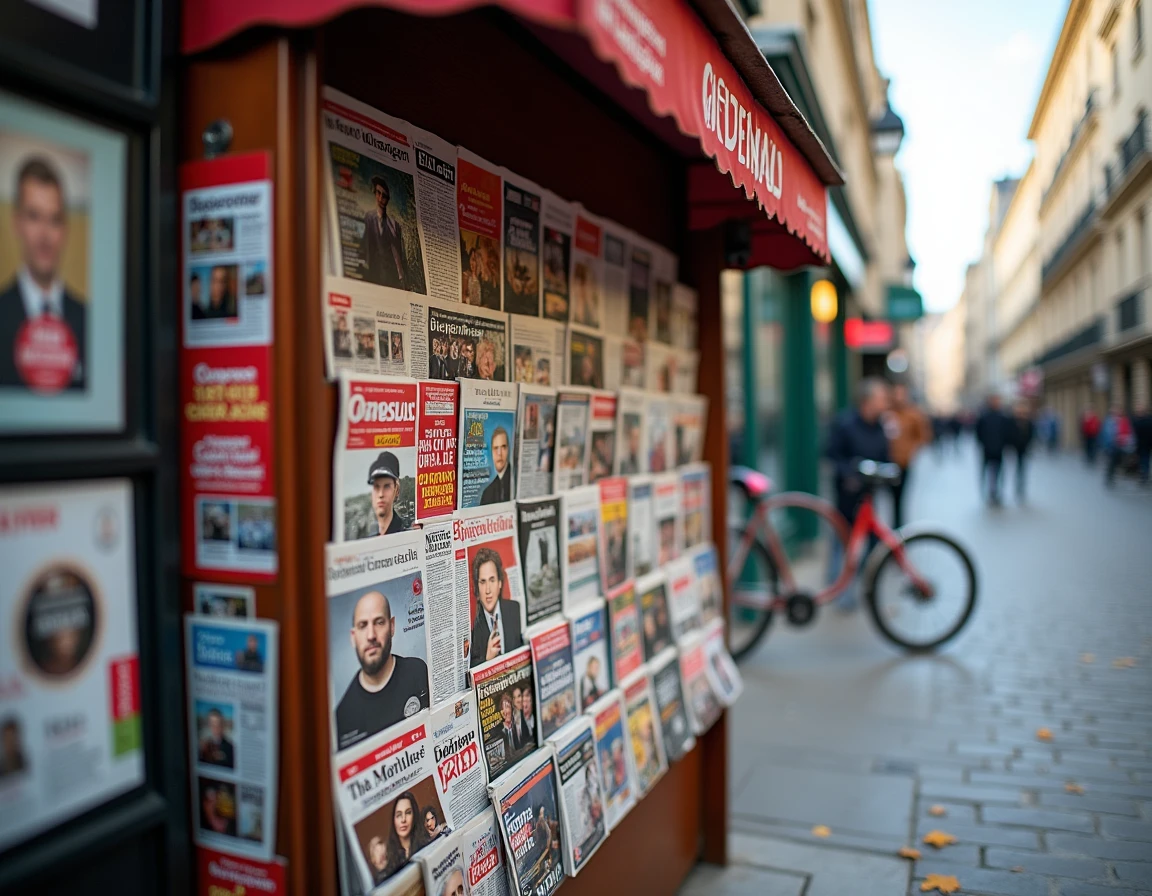
Image quality is another parameter. Reproducing a front page in high resolution would allow reading the articles, which conflicts with neighboring rights and the economic model of publishers. Most platforms therefore opt for low-resolution thumbnails sufficient to identify the main title, not to read the editorial content.
Archiving and Retrospective Consultation
Consulting the front page of the day is one thing. Finding one from a specific date is another. Free services generally only keep the front page of the day or the day before. Professional databases like Europresse or Factiva offer a deeper history, but access remains paid and often reserved for libraries, universities, or businesses.
For a researcher or a documentalist, the archiving of front pages remains a gap in free platforms. The available data do not suggest that this situation will evolve quickly, as the cost of storage and rights constraints hinder initiatives.
Comparing French and International Press Front Pages: What Concrete Interest
Beyond curiosity, comparing front pages provides a direct reading grid of media treatment. During a major event, observing which titles place the information on the front page, which visuals are chosen, and which angles dominate allows for measuring editorial differences from one country or political current to another.
Media education teachers regularly use this type of comparison in class. Communicators find it a monitoring tool: knowing whether their client or sector is making headlines, and how, guides the response strategy.
However, simply consulting the front pages does not replace reading the articles. A headline can dramatize or minimize a subject depending on the editorial line, and only the complete content allows for judging the journalistic treatment. The aggregation of front pages functions as a barometer of media attention, not as a substitute for in-depth information.
The landscape of front page aggregation remains fragmented between limited free tools and expensive professional solutions. The pressure of neighboring rights will likely continue to shape display methods, pushing platforms towards partnership models rather than unilateral reproduction. For those who want to follow the news through its front pages, the reflex to cross-reference multiple aggregation sources remains the most reliable method.